WeChat official account
News
How can green and low‑carbon transformation be achieved in the core district of a megacity where every inch of land is precious? Recently, Huangpu District of Shanghai has officially issued the 15th‑Five‑Year Plan for the Construction of Beautiful Huangpu. It sets the goal of fully building a national carbon‑peak demonstration zone by 2030, and promotes the coordinated progress of carbon reduction, pollution mitigation, green expansion and economic growth.
Constrained by land scarcity and heavy urban‑renewal workload, central urban areas like Huangpu are confronted with inevitable practical challenges. This plan delivers a practical roadmap for green development in high‑density urban zones. For photovoltaic deployment, the document proposes to fully tap the potential of distributed photovoltaics and advance the special "PV+" initiative. It stipulates that photovoltaic‑covered rooftop area shall account for no less than 50% of newly‑built government and educational buildings, and no less than 30% for other public and residential buildings. Meanwhile, high priority is given to the promotion of ultra‑low‑energy and nearly‑zero‑energy buildings. The district will also foster green low‑carbon service industries and build benchmark low‑carbon intelligent building projects.
Buildings constitute a major source of urban carbon emissions. For Huangpu, energy‑saving retrofits for a large number of existing buildings together with improved energy efficiency of new constructions are critical to delivering local carbon‑reduction targets. A batch of municipal‑level dual‑carbon demonstration projects, including Yaojiang Garden, New World Marunouchi Center and BFC Bund Financial Center, are included in the plan. These urban landmarks will serve as pilot cases to explore a replicable and scalable low‑carbon development model for central urban areas. Energy‑saving renovation of public buildings and construction of low‑carbon commercial premises will be key priorities in the next phase.

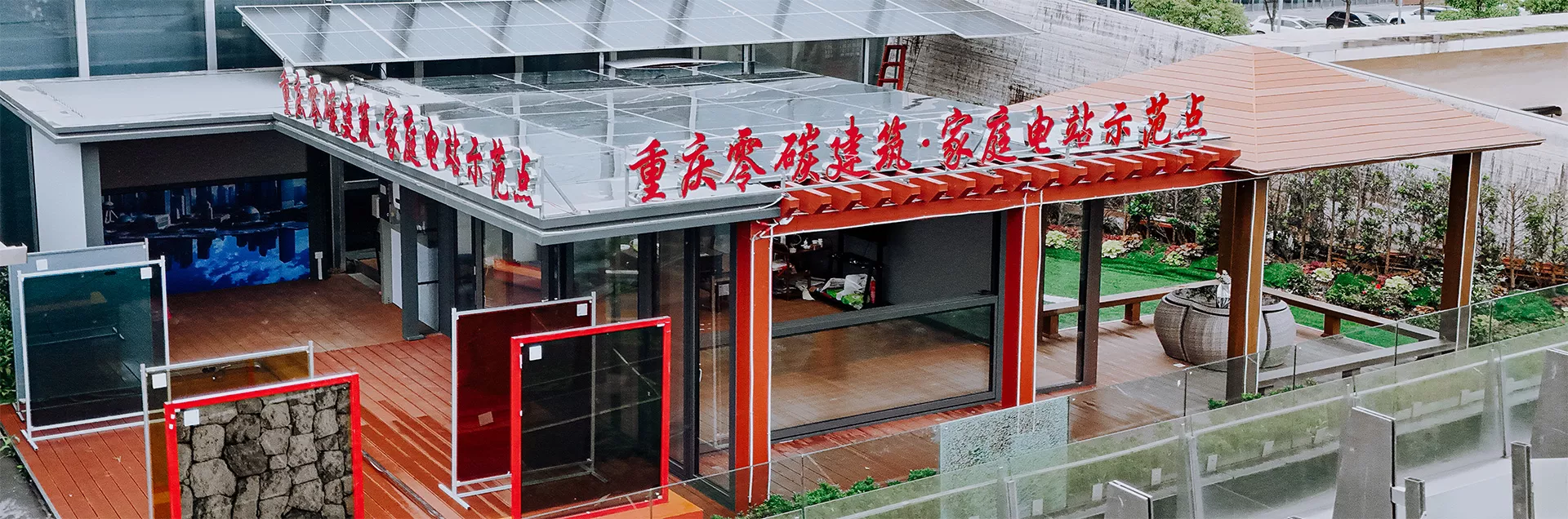
Nevertheless, high‑density urban areas face a tangible bottleneck: rooftop space suitable for conventional photovoltaic systems is extremely limited. Across the district, extensive curtain walls of heritage buildings, commercial complexes and riverside public facilities represent an undervalued resource. Building‑Integrated Photovoltaics (BIPV) offers an innovative solution, by integrating photovoltaic modules into the building envelope so that the building itself becomes a power‑generation carrier. Photovoltaic building materials, represented by cadmium‑telluride power‑generating glass, can directly replace conventional curtain‑wall and roofing materials. Balancing architectural aesthetics and power‑generation performance, they are applicable to diverse scenarios such as heritage building renewal, new public facilities and riverside supporting projects. Without occupying additional scarce land resources, they maximize the inherent value of building structures.
This 15th‑Five‑Year Plan defines clear targets for building‑related carbon reduction in megacity core zones and charts the path for demonstration‑project construction and new‑technology roll‑out. Green transition in land‑constrained downtown areas requires both top‑level policy guidance and continuous industrial technology innovation and implementation. How to scale building decarbonization from a small number of pilot projects to regular, large‑scale deployment remains a key topic for ongoing industry research and exploration.